Biodiversity Corridors in European Eco-Hotels: Which Regions Protect the Most Land?
Which European regions protect the most land through eco-hotels and biodiversity corridors? A data-driven guide for ecotravelers seeking real impact.
By La rédaction de Ecotourism Destinations
·10 min read

In this article
TL;DR
- Europe's Natura 2000 network covers over 18% of the EU's land surface (source: European Environment Agency, 2024), forming the legal backbone for biodiversity corridor protection that eco-hotels can participate in.
- The regions with the highest density of eco-certified accommodations inside or adjacent to wildlife corridors are Scandinavia, the Carpathian arc, and the Iberian meseta — each for distinct ecological and regulatory reasons.
- Eco-certification labels differ sharply in land-protection requirements: Green Key, EU Ecolabel, and Nordic Swan each mandate different levels of habitat stewardship.
- Land conservation commitments by eco-hotels range from passive buffer-zone compliance to active rewilding contracts with NGOs — the difference matters for ecological impact.
- Asking four specific questions to your accommodation before arrival can help you distinguish genuine corridor stewardship from greenwashing.
What Is a Biodiversity Corridor — and Why Do Hotels Enter the Picture?
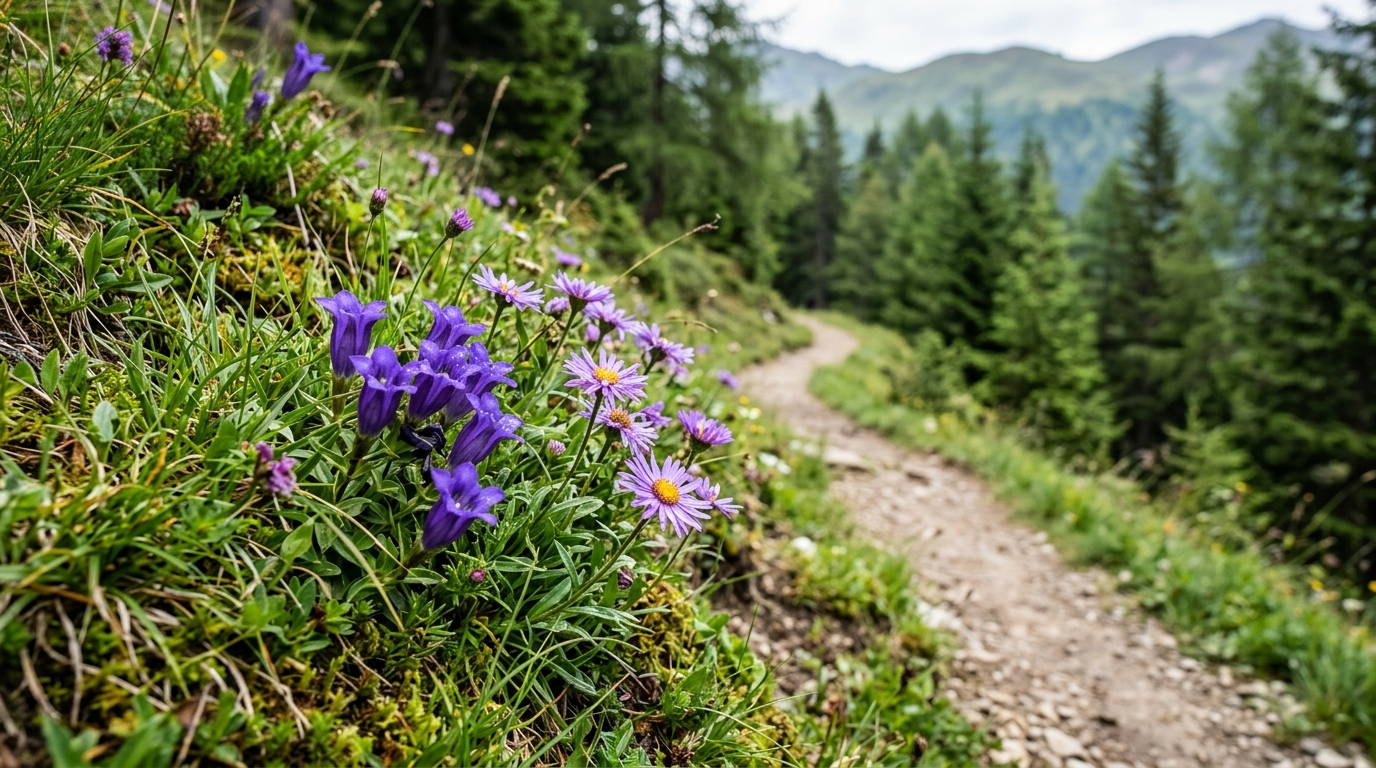
A biodiversity corridor is a strip or network of habitat that connects fragmented ecosystems, allowing species to migrate, find mates, and respond to climate shifts. Without corridors, isolated populations face genetic bottlenecks and local extinction. The concept has been central to conservation biology since the 1980s, but its legal architecture in Europe matured with the Natura 2000 network, established under the Habitats Directive (92/43/EEC) and the Birds Directive (2009/147/EC).
As of 2024, Natura 2000 protects approximately 18.6% of the EU's terrestrial area and nearly 9% of its marine area (source: European Environment Agency, 2024). The newer EU Biodiversity Strategy for 2030 sets a target of legally protecting 30% of EU land by 2030 and strictly protecting 10% (source: European Commission, 2021).
Eco-hotels enter this picture for three reasons. First, rural hospitality properties often sit on or near large land parcels that overlap with corridor zones. Second, conservation NGOs and national park authorities have increasingly partnered with accommodation providers to fund land stewardship through tourism revenue. Third, certification bodies now require — or reward — active corridor participation as a scoring criterion.
The result is a geography of ecotourism that maps, imperfectly but meaningfully, onto Europe's most critical wildlife corridors.
The Natura 2000 Framework: What It Means for Accommodation Providers
Legal obligations inside designated sites
Any accommodation operating within a Natura 2000 Special Area of Conservation (SAC) or Special Protection Area (SPA) is subject to national transposition of the Habitats Directive. This typically means that construction, landscaping, and lighting must undergo a Habitats Regulations Assessment. In practice, properties inside these zones are constrained in how they can expand infrastructure — which limits footprint growth but also creates a credible signal of low-impact operation.
According to the European Environment Agency's Natura 2000 Barometer (2022), roughly 27,000 sites are now designated across EU member states, covering habitats from Atlantic coastal heathlands to Pannonian steppe grasslands.
The gap between designation and active management
Designation, however, does not automatically guarantee active habitat management. Studies compiled by the EEA (2020 State of Nature report) found that only 15% of habitat assessments and 27% of species assessments across the EU showed favourable conservation status — meaning the majority of Natura 2000 sites remain degraded or recovering. This is the gap that well-managed eco-hotels, when embedded in corridor zones, can help bridge through active land stewardship contracts.
Regional Breakdown: Where Eco-Hotels and Corridors Overlap Most
Scandinavia: boreal corridors and the Nordic Swan standard
Sweden and Finland together hold some of Europe's least fragmented boreal forest corridors. Sweden's national environmental quality objective system, coordinated by the Swedish Environmental Protection Agency (Naturvårdsverket), identifies several priority corridor zones stretching from Lapland southward through Dalarna and Värmland. Eco-hotels operating in these zones — particularly those certified under the Nordic Swan Ecolabel (Svanen), which requires hotels to report land-use impact and participate in local biodiversity programs — form the densest cluster of corridor-integrated accommodation in Europe.
The Nordic Swan's Nature criteria (updated 2022) require certified properties to document any adjacent protected area, avoid pesticides across their land, and support pollinator habitat. This is qualitatively more demanding than many Southern European equivalents.
The Carpathian Arc: Europe's last large carnivore corridor
The Carpathian mountains — spanning Romania, Slovakia, Poland, Ukraine, and the Czech Republic — contain the largest population of brown bears, wolves, and lynx in Europe outside Russia (source: IUCN Large Carnivore Initiative for Europe). This arc functions as a critical wildlife corridor linking populations across national borders. Romania alone holds an estimated 6,000–8,000 brown bears (source: WWF Romania / Romanian Ministry of Environment estimates cited in IUCN reports).
Eco-lodges in Transylvania and the Bucegi Natural Park area have increasingly positioned themselves around wildlife corridor tourism — specifically wolf- and bear-tracking itineraries guided by licensed naturalists. The Romanian Forest Code and the Habitats Directive implementation in Romania designate significant portions of the southern and eastern Carpathians as Natura 2000 SACs.
The challenge here is certification consistency: EU Ecolabel uptake in Romania remains low compared to Western Europe, meaning travelers must scrutinize individual property claims more carefully.
Iberian Peninsula: the Iberian lynx corridor and dehesa landscapes
Spain and Portugal host one of the most dramatic conservation recovery stories in European history: the Iberian lynx (Lynx pardinus), which fell to fewer than 100 individuals in the early 2000s and has recovered to over 2,000 as of 2024 (source: LIFE Lynx Connect project / Spanish Ministry for Ecological Transition, MITECO, 2024).
The lynx's recovery depends on functioning habitat corridors through Andalusia, Extremadura, and the Alentejo region of Portugal. Eco-accommodations — particularly rural tourism estates (fincas and herdades) operating within the dehesa agro-silvo-pastoral system — sit directly in these corridors. The dehesa, a mosaic of cork oak, holm oak, and open grassland, is itself classified under Natura 2000 Habitat Type 6310 and is considered one of Europe's most biodiverse anthropogenic landscapes.
IDAE (Instituto para la Diversificación y Ahorro de la Energía) and MITECO jointly fund rural eco-tourism initiatives that integrate energy efficiency with habitat management. Properties in Spain can receive support under the PERTE for the circular economy and sustainable tourism frameworks.
The Alps and Dolomites: fragmentation pressure and certified escape routes
The Alpine arc presents the most complex picture. It is both Europe's most visited mountain region — hosting over 120 million visitor arrivals annually across all Alpine countries (source: Alpine Convention, CIPRA reports) — and a critical corridor for species including the Eurasian lynx, the golden eagle, and the European wildcat. The Alpine Convention, an international treaty among eight Alpine states, provides a legal framework for coordinated land management.
Eco-hotels in South Tyrol (Italy), Vorarlberg (Austria), and the Swiss Graubünden carry some of Europe's highest density of stringent certifications — including the Austrian Eco-Label (Österreichisches Umweltzeichen) and Italy's ISNART-certified ecostrutture. The best performers in these regions participate in the Wildlife Crossing Coalition, a pan-Alpine NGO initiative, contributing funding for fauna passages over major roads.
How Eco-Certifications Actually Address Land Protection
Not all eco-labels are equal in their land and corridor requirements. Here is a comparative summary for travelers:
Green Key (FEE): Operates in 60+ countries, has strong energy and water criteria. Its biodiversity module requires that properties document species present and avoid invasive plantings — but does not mandate active corridor management or minimum land-protection areas. Useful baseline; insufficient for corridor-focused travelers.
EU Ecolabel (Flowers) for Tourist Accommodation: Managed by the European Commission. Its environmental criteria (Decision 2017/175/EU) include noise management, light pollution limits, and requirements to provide guests with information on local protected areas. It does not require a minimum land buffer or active habitat contracts. Credible on operational sustainability; partial on land.
Nordic Swan (Svanen): As noted above, the most demanding in terms of documented biodiversity impact. Mandatory for properties claiming corridor adjacency in Scandinavia.
Biosphere Responsible Tourism: Operated under the UNESCO Man and the Biosphere framework. Biosphere-certified properties are required to operate within or actively support a UNESCO Biosphere Reserve or equivalent zone — which in Europe typically overlaps strongly with Natura 2000 designations. Strong land alignment.
National park partnership programs: Several national parks (Cévennes in France, Peneda-Gerês in Portugal, Białowieża in Poland) operate their own partner accommodation schemes requiring stewardship agreements. These are often more rigorous than generic eco-labels for corridor impact, though less standardized.
What Genuine Corridor Stewardship Looks Like in Practice
Active versus passive compliance
The meaningful distinction for impact-conscious travelers is between passive compliance (operating within a designated zone without violating regulations) and active stewardship (contributing land management, funding, or monitoring to corridor health).
Active stewardship examples documented by properties across Europe include: entering rewilding agreements with Rewilding Europe or national equivalents; funding wildlife crossing infrastructure through per-night guest contributions; maintaining dark-sky protocols to protect nocturnal species movement; managing on-site corridors for pollinators through certified organic land management; and hosting scientific monitoring programs for target species.
Four questions to ask your eco-hotel before booking
- Which certification body audits your land-management commitments, and how often? (Annual third-party audits are the minimum credible standard.)
- Does your property sit within, adjacent to, or simply near a Natura 2000 site — and what is the site's current conservation status? (The EEA's Natura 2000 viewer is publicly accessible.)
- What proportion of your land is managed actively for habitat, and under what agreement? (A signed stewardship contract with a conservation body is the gold standard.)
- How is a portion of guest revenue directed toward corridor conservation, and can you provide documentation? (Transparency here is the clearest indicator of genuine commitment.)
The Policy Horizon: EU Biodiversity Strategy 2030 and Its Tourism Implications
The EU Nature Restoration Law, adopted in 2024 after a contested legislative process, sets binding national restoration targets for degraded ecosystems — including a requirement to restore at least 20% of EU land and sea areas by 2030, and all ecosystems in need of restoration by 2050 (source: European Commission, Regulation (EU) 2024/1991 on nature restoration).
For ecotourism, this creates both opportunity and scrutiny. Properties that can demonstrate they are contributing to restoration — not merely avoiding harm — will be in a legally and reputationally stronger position. Travelers who choose these properties also contribute to a financing model that national governments cannot replicate through public budgets alone.
The European Commission's Sustainable Tourism Observatory network (ETIS) is developing corridor-impact metrics for tourism destinations. When standardized, these will give travelers and booking platforms the first comparable dataset for land-protection performance across European eco-hotels.
FAQ
Ecotourism Destinations est édité par ENN Consulting SAS
Recommended reads
More in Eco tourism in Europe →
Heat resilient ecotourism destinations : Heat-Resilient
Which countries are truly climate-proofing their tourism infrastructure? A data-driven guide to heat-resilient ecotourism destinations for the conscious traveler.
Air conditioning energy use ecotourism mediterranean : Air
How air conditioning energy demand reshapes ecotourism seasonality in Mediterranean destinations — and what travellers can do to visit more sustainably.