EU Carbon Border Adjustment Mechanism: What CBAM Really Means for Eco-Tourism Prices in 2026
CBAM carbon border tax tourism impact explained: how the EU Carbon Border Adjustment Mechanism reshapes eco-tourism pricing in 2026 and what conscious travelers must know.
By La rédaction de Ecotourism Destinations
·10 min read
In this article
TL;DR
- CBAM is not a travel tax, but it raises costs for carbon-intensive supply chains that underpin tourism infrastructure — from building materials to energy production.
- Eco-certified accommodations and low-carbon itineraries are structurally less exposed to CBAM cost pass-throughs than conventional tourism operators.
- The full financial mechanism kicks in from January 2026, when free EU ETS allowances begin phasing out and CBAM certificates become mandatory for importers.
- Travelers choosing rail, local sourcing, and eco-labeled stays will absorb the smallest indirect price increases.
- Prices for carbon-intensive travel segments (new resort construction, long-haul feeder flights, imported goods in tourist supply chains) are likely to rise 3–8% over 2026–2030, per European Commission impact projections.
What Is CBAM, and Why Should Travelers Care?

By 2026, the CBAM carbon border tax tourism impact will be felt across European travel budgets in ways most holidaymakers have not yet anticipated. Already in 2024, EU ETS carbon prices traded between €55 and €75 per tonne of CO₂ (source: European Energy Exchange EEX, 2024), and the full definitive phase of CBAM begins in January 2026 — locking in cost pass-throughs for carbon-intensive supply chains that run through the heart of the tourism industry.
The Carbon Border Adjustment Mechanism is an EU regulation — formally Regulation (EU) 2023/956 — that places a carbon price on specific imported goods based on the greenhouse gas emissions embedded in their production. Its purpose is to prevent "carbon leakage": the risk that European industries shift production to countries with weaker climate rules, or that EU consumers simply import carbon-intensive goods from elsewhere to bypass the EU Emissions Trading System (EU ETS).
CBAM entered its transitional phase in October 2023 (source: European Commission, Regulation EU 2023/956). As of January 2026, importers of covered goods must surrender CBAM certificates, priced against the EU ETS carbon price.
The sectors currently covered by CBAM are: steel, cement, aluminium, fertilisers, electricity, and hydrogen. Aviation fuel and tourism services are not directly covered. So why does it matter to someone booking a hiking trip in Slovenia or a cycle tour through Brittany?
Because tourism is a downstream consumer of nearly every CBAM-covered sector.
The Indirect Transmission: How CBAM Carbon Border Tax Tourism Impact Flows Into Pricing
Construction and Infrastructure
Hotels, lodges, mountain refuges, and marina infrastructure are built with steel, aluminium, and cement — all CBAM-covered materials. When a hotelier in Andalusia or a glamping operator in the Carpathians sources imported steel from a non-EU producer, that importer now bears a carbon cost. Those costs pass downstream.
The European Commission's own impact assessment estimates that CBAM could raise the cost of imported steel by 20–35% for high-carbon origin countries (source: European Commission SWD(2021) 643 final). For construction-dependent tourism sectors, this feeds into capital expenditure and, eventually, room rates — particularly for new builds or major renovations. In Spain alone, the tourism construction pipeline includes over 120 new hotel projects planned for 2025–2027, many dependent on imported steel and aluminium. Portugal's Algarve region recorded a 18% increase in resort construction permits in 2023 (source: Portuguese Tourism Authority, 2023). Greece's island infrastructure investment reached €2.4 billion in 2022–2023 (source: Hellenic Statistical Authority, 2023), with a significant share tied to steel and cement imports — precisely the inputs now subject to CBAM certificate costs.
Energy and Utilities
Electricity is among CBAM's covered sectors when imported from non-EU grids. Countries like Norway and Switzerland — major suppliers of renewable electricity to the EU — are likely to be exempt due to their alignment with EU carbon pricing. But grid-connected accommodation in regions dependent on energy imports from non-aligned third countries will face upward price pressure.
The EU's REPowerEU plan targets 45% of EU energy from renewables by 2030 (source: European Commission REPowerEU, 2022). Eco-accommodations already sourcing 100% renewable energy — a core criterion for certifications like the EU Ecolabel or Green Key — are structurally insulated from this specific vector.
Imported Goods in Tourist Supply Chains
Tourism operations consume aluminium (furniture, cookware, packaging), fertilisers (landscaping, golf courses, farms supplying restaurants), and steel (transport infrastructure, equipment). Even a well-intentioned lodge in Portugal buying locally-assembled furniture that incorporates imported aluminium components bears some exposure.
For highly localised, farm-to-table, seasonally-operated eco-lodges, this supply chain exposure is minimal. For large resort operators importing at scale, the cumulative pass-through is material.
2026 Price Outlook: What Numbers Are Defensible?
Precise predictions about CBAM's exact impact on a Slovenian mountain hut or a French coastal campsite would be speculative. However, several frameworks help bound the estimates:
- EU ETS carbon price trajectory: The European Commission projects an EU ETS price range of €65–€130 per tonne CO₂ by 2030 (source: European Commission, EU ETS reform impact assessment, 2021). The higher the carbon price, the larger the CBAM certificate cost for importers.
- Free allowances phase-out: Free EU ETS allowances for industry decrease by 10% per year from 2026 to 2034, when they are fully eliminated (source: Regulation EU 2023/956). This progressive tightening means cost pass-through intensifies year on year.
- Tourism sector exposure: A 2023 analysis by the European Travel Commission estimated that energy and construction materials account for 15–25% of total operating costs for accommodation providers (source: European Travel Commission, European Tourism 2023 — Trends & Prospects). CBAM affects a subset of those inputs, suggesting modest but real upward pressure on accommodation pricing — in the range of 2–6% for carbon-intensive operators over 2026–2028.
For the eco-conscious traveler, the practical implication is that the price gap between low-carbon and high-carbon travel options is likely to widen. That is, structurally, good news for sustainable tourism economics.
CBAM Cost Pass-Through by Tourism Segment (2026–2030 Estimate)
| Tourism segment | CBAM supply chain exposure | Estimated price uplift 2026–2030 | Key exposed inputs |
|---|---|---|---|
| Newly built resorts (EU, non-EU steel) | High | 5–8% | Steel, aluminium, cement |
| Island destinations (energy imports) | High | 4–7% | Electricity, construction materials |
| Ski infrastructure | Medium–High | 4–6% | Steel lifts, snowmaking equipment |
| Agritourism (imported fertilisers) | Medium | 2–4% | Fertilisers |
| EU Ecolabel certified accommodation | Low | 1–2% | Minimal import dependency |
| Rail-based slow travel itineraries | Very low | <1% | Domestic energy, long-lived infrastructure |
| Nature-based, low-infrastructure tours | Negligible | <1% | No significant CBAM-covered inputs |
Which Eco-Tourism Segments Are Most Insulated?
Rail-Based and Slow Travel Itineraries
Eurail and national rail networks are among the least CBAM-exposed modes of long-distance travel. Train infrastructure is long-lived, energy sourced domestically, and the operational supply chain is largely European. Interrail usage among adults aged 35–55 grew significantly post-pandemic, with the European Commission reporting over 400,000 Interrail passes sold in 2023 (source: European Commission, Interrail programme data, 2023).
Choosing rail over short-haul flying is not merely a carbon calculation — it is also a hedge against indirect CBAM cost pressures embedded in aviation infrastructure supply chains. For a deeper look at how to plan low-carbon rail routes across Europe, see our guide to sustainable rail itineraries in Europe.
EU Ecolabel and Green Key Certified Accommodations
As of 2024, there were over 800 EU Ecolabel licensed tourist accommodations across Europe (source: European Commission, EU Ecolabel product catalogue, 2024), and Green Key certified over 3,300 establishments in 65 countries (source: Green Key International, 2024).
These certifications require, among other things: high shares of renewable energy, reduced use of single-use materials (aluminium, plastics), and local sourcing. These operational characteristics directly reduce exposure to CBAM-covered input cost increases. An eco-lodge running on solar with locally sourced timber construction and farm-to-table catering has near-zero direct CBAM supply chain exposure. Browse our directory of EU Ecolabel and Green Key certified stays to find properties that are both certified and CBAM-resilient.
Nature-Based and Low-Infrastructure Tourism
Wild camping under permit systems (legal in Scotland, Sweden, Finland, and parts of Norway), guided hiking, cycling, kayaking, and birdwatching tours involve minimal physical infrastructure and short, local supply chains. Their CBAM exposure is negligible. Prices in these segments are driven by guide wages, permit systems, and insurance — none of which CBAM touches.
Where Prices Will Rise: A Realistic Map
Not all eco-travel is equally insulated. Travelers should expect upward price pressure in:
- Newly built eco-resorts that began construction post-2023, when steel and aluminium import costs were already rising in anticipation of CBAM's definitive phase.
- Ski infrastructure dependent on snowmaking equipment (steel, aluminium-intensive) and lifts sourced from non-EU manufacturers.
- Island destinations with electricity grids partially dependent on non-EU energy imports and high import ratios for construction materials (Canary Islands, Malta, Corsica).
- Agritourism operators using imported fertilisers, particularly those not yet transitioned to organic or regenerative practices. CBAM covers fertilisers, and non-EU fertiliser imports — notably from Russia, which was the EU's largest external supplier before 2022 — carry high embedded carbon.
The common thread: high dependency on imported, carbon-intensive inputs from non-EU countries without equivalent carbon pricing.
What Eco-Conscious Travelers Can Do in Practice
Understanding CBAM's mechanics translates into a cleaner booking logic:
- Prioritise EU Ecolabel, Green Key, or Biosphere-certified accommodations — their operating model minimises the input cost exposure CBAM creates.
- Book rail over short-haul air where journey time is under 6 hours. Eurostar, Renfe AVE, DB ICE, Trenitalia Frecciarossa, and SNCF TGV all cover major corridors competitively.
- Ask accommodation providers about their energy sourcing — a direct question about renewable energy percentage reveals both carbon commitment and CBAM cost resilience.
- Travel shoulder season to established destinations rather than peak season to newly built, carbon-intensive resorts. Older infrastructure has already absorbed capital costs; CBAM affects marginal new investment most.
- Support locally owned, smaller operators — their supply chains are shorter, their import dependency lower, and their resilience to EU regulatory cost shifts higher.
- Monitor EU ETS price movements if planning significant forward bookings. The EU ETS price is publicly available on EEX (European Energy Exchange) and moves seasonally. Higher ETS prices signal higher forthcoming CBAM certificate costs.
Ready to find stays that are structurally protected from CBAM cost pass-throughs? Search certified eco-accommodations with our booking tool and filter by certification, energy sourcing, and region.
The Bigger Picture: CBAM as a Market Signal, Not Just a Cost
For sustainable tourism, CBAM's deepest effect may be structural rather than immediate. By making carbon-intensive supply chains more expensive, it accelerates the relative competitiveness of low-carbon tourism operators — the ones eco-conscious travelers are already choosing.
The European Commission's Fit for 55 package, of which CBAM is a central pillar, aims to reduce EU net greenhouse gas emissions by at least 55% by 2030 compared to 1990 levels (source: European Commission, Fit for 55 package, 2021). Tourism, as a cross-sectoral activity, will reflect that transition through progressive repricing of carbon-intensive elements.
For the traveler aged 35–55 who already chooses destinations for their ecological integrity and economic authenticity, CBAM does not change the direction of travel — it sharpens the economic rationale for the choices many are already making.
FAQ
Ecotourism Destinations est édité par ENN Consulting SAS
Recommended reads
More in Eco tourism in Europe →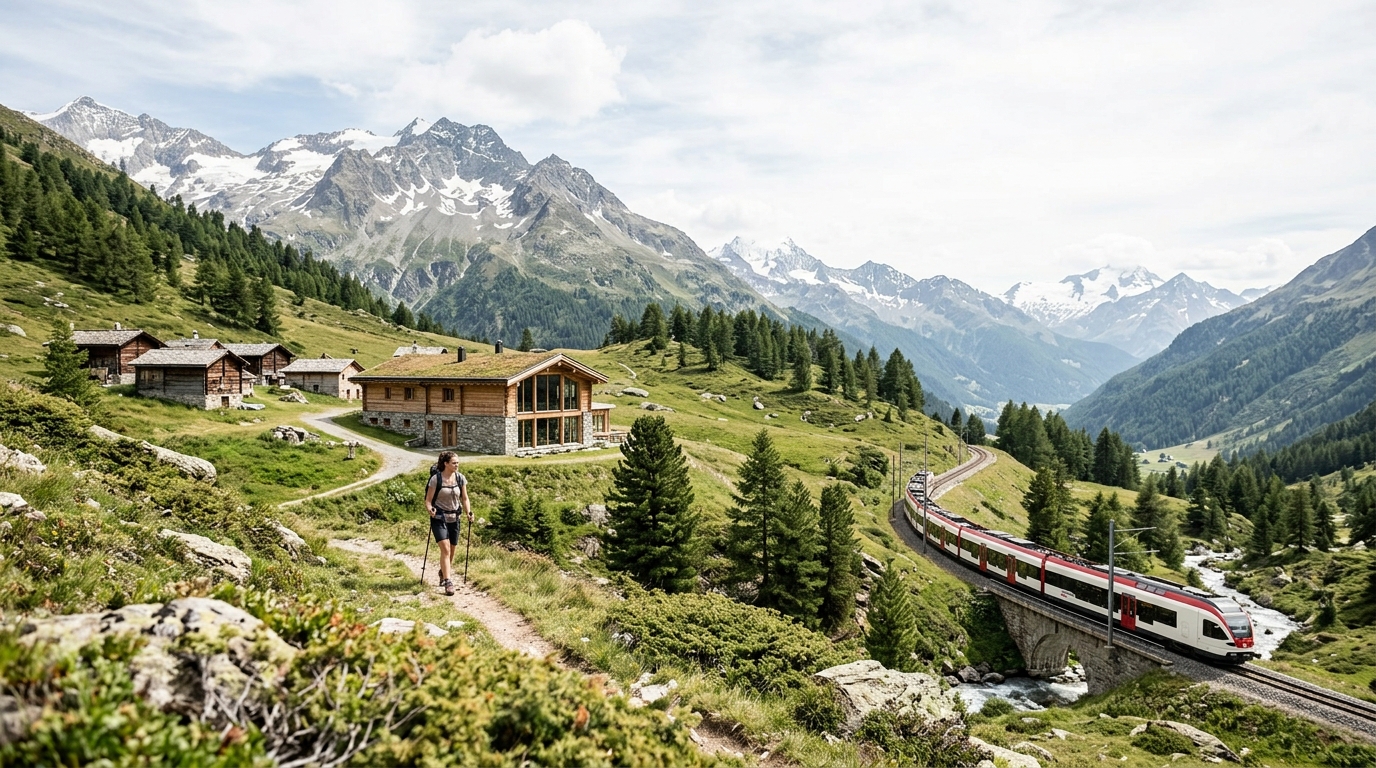
European Train Networks Carbon Emissions Tourism
European train networks carbon emissions tourism: rail emits up to 90% less CO₂ than flying. Discover top routes, night trains, and low-carbon tourism strategies for 2026.
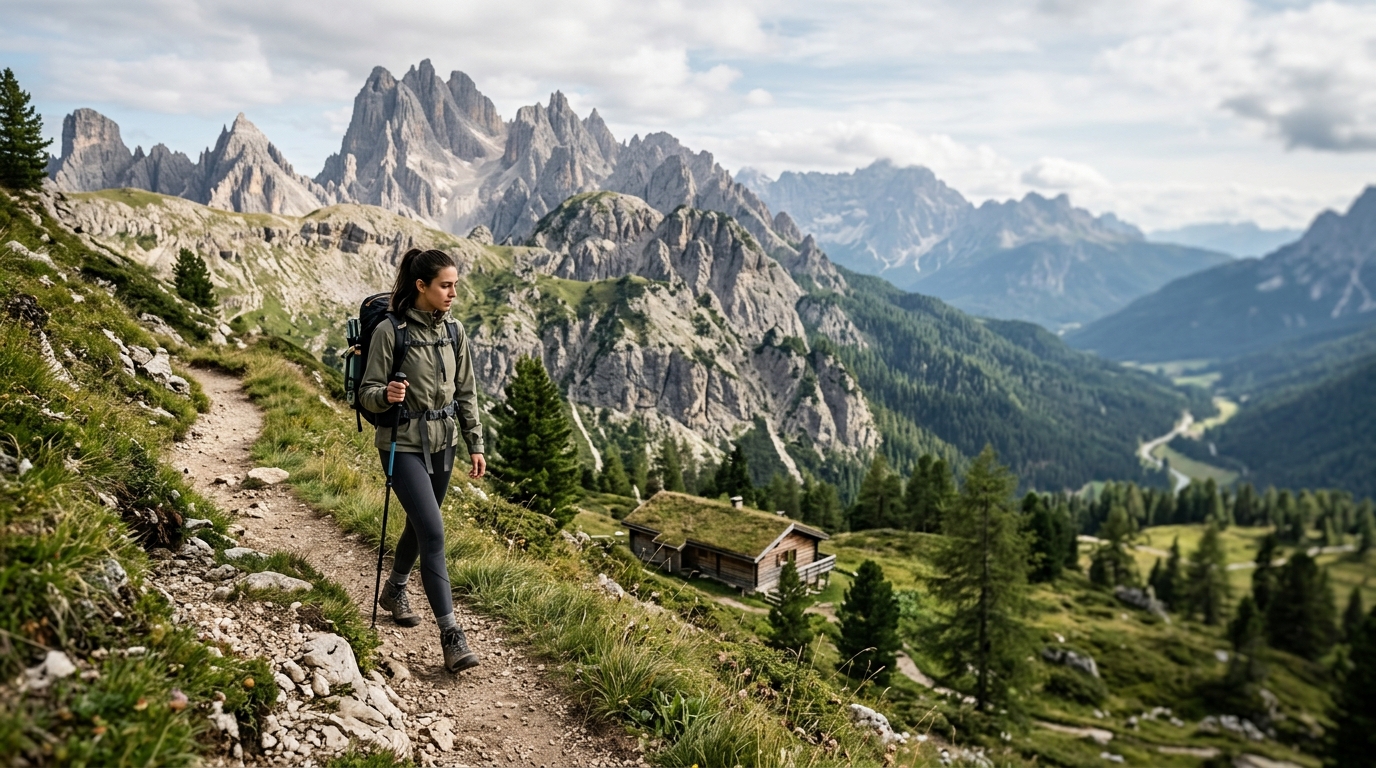
European Ecotourism Certifications Verified 2026
Spot greenwashing before you book. Our 2026 guide to european ecotourism certifications verified by third parties—EU Ecolabel, Green Key, Travelife, and more.

EU energy label ecotourism hotels 2026 guide
EU energy label ecotourism hotels 2026: discover what the new A–G rating measures, how it shapes your eco-stay choice, and which certifications to pair it with.

European ecotourism prices september off-season : European
Discover how european ecotourism prices september off-season drop by 20–40%, which eco lodges offer the best deals, and how to plan a low-impact autumn trip.